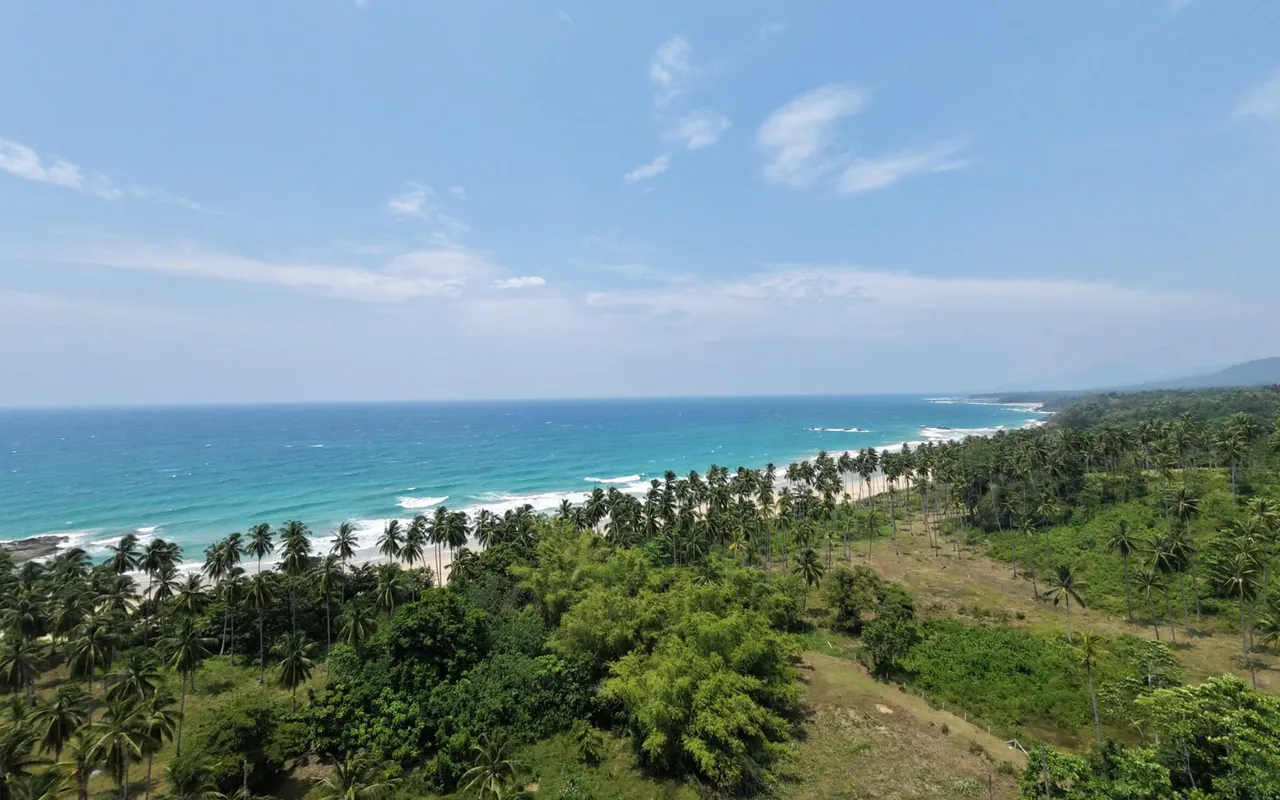
In Palawan, the paper behind a piece of land matters more than the view, the price or the seller's promises. A land title proves ownership. A tax declaration does not. And if the land is classified as forest land, no paper in the world will ever let you own it.
This guide explains the three papers you will hear about most (title, A&D classification and tax declaration), what they really mean, and which warning signs should make you walk away. It is written for buyers from abroad, but it applies just as much to Filipino buyers.
The short answer: buy land with a clean Torrens title (OCT or TCT) that has been verified at the Registry of Deeds, on land that DENR confirms as alienable and disposable (A&D). Everything else carries risk that you need to understand before you pay a single peso.
Why this matters more in Palawan than almost anywhere else
Large parts of Palawan are forest land, protected areas or ancestral domain. These areas belong to the state or to indigenous communities and cannot be sold to private owners, no matter who claims them or how long a family has lived there.
The Department of Environment and Natural Resources (DENR) for the MIMAROPA region, which includes Palawan, has publicly warned buyers about exactly this. Its regional director stated that tax declarations are not proof of ownership when the land is forest land or government land, and advised buyers to "think twice" if they are offered timberland with only a tax declaration. The same warning points out that the Revised Forestry Code (PD 705) does not allow anyone to occupy or develop forest land without a government permit.
Palawan also has its own environmental law, the Strategic Environmental Plan for Palawan (RA 7611). It divides the province into zones under the Environmentally Critical Areas Network (ECAN), and some of these zones allow little or no development, even on land with a valid title.
In short: in Palawan, a beautiful beachfront lot can turn out to be land that can never be titled, never be built on, or both. Buyers who skip proper checks are the ones who lose their money.
The three papers you will hear about
| Paper | What it is | Proves ownership? | What it means for you |
|---|---|---|---|
| Torrens title (OCT or TCT) | The official certificate of ownership, registered at the Registry of Deeds | Yes | The safest way to buy, once verified |
| A&D classification | DENR's confirmation that the land is alienable and disposable, so it can be privately owned | No, it only confirms the land can be owned | A must-have, but not enough on its own |
| Tax declaration | A record at the municipal or city assessor used to collect property tax | No | Shows who pays tax, not who owns the land |
Torrens title (OCT or TCT). An Original Certificate of Title (OCT) is the first title ever issued for a piece of land. A Transfer Certificate of Title (TCT) is issued each time the land changes hands. For condos the equivalent is a Condominium Certificate of Title (CCT). A Torrens title is the strongest proof of ownership in the Philippines, but only if the copy you are shown matches the original kept at the Registry of Deeds.
A&D classification. In the Philippines, all land belongs to the state unless it has been classified as alienable and disposable. Only A&D land can become private property. DENR, through its local office (CENRO), can certify whether a parcel is A&D, forest land or part of a protected area. If the land is not A&D, no title can legally be issued.
Tax declaration. A tax declaration lists the property, its assessed value and the person who pays the real property tax. Many families in Palawan have held land this way for generations, and much of it is genuinely theirs to sell. But a tax declaration is not a title. It can exist on land that will never be titled, and more than one person can sometimes hold a tax declaration over the same area.
Other papers you may be shown
- "Rights", waiver or deed of assignment of rights. The seller does not sell the land, only their claim to it or their possession. You are buying a position in a possible future titling process, with no guarantee it will ever succeed.
- Survey plan. An approved survey shows the boundaries and the lot number. It does not prove ownership and does not mean a title will follow.
- Pending free patent or titling application. A title has been applied for but not issued. Applications can take years and can be rejected, for example if the land turns out not to be A&D.
- CLOA or EP (agrarian reform land). Land awarded to farmer beneficiaries under agrarian reform. It comes with strict limits on sale and transfer, and it is generally not available to foreign buyers or ordinary corporations.
- CADT or CALT (ancestral domain). Land recognised as belonging to an indigenous community. It is not for sale to outsiders.
- A lot inside a "mother title". The land is part of a larger titled property that has not yet been subdivided. This can be fine, but only if the subdivision and the transfer of your part are clearly agreed and realistic.
None of these papers is automatically a scam. Many are part of normal land history in Palawan. But each one carries a specific risk, and the price you pay should reflect it.
Red flags that should stop a purchase
- The seller pushes you to pay a deposit before you have checked the title yourself.
- You only receive photos or photocopies, never access to the owner's duplicate title.
- The title details differ from the certified true copy at the Registry of Deeds.
- The seller cannot or will not get a land classification certification from DENR.
- The land lies on a mountain slope, on a small island or right next to mangroves, and the seller only has a tax declaration.
- The price is far below other offers in the same area, with no clear reason.
- The "seller" is not the registered owner and has no Special Power of Attorney.
- People are living on or farming the land, and nobody can explain why.
- The agent is not a licensed real estate broker and cannot show a PRC license number.
One red flag does not always mean fraud. But each one is a reason to slow down, check further and, if the answers are not convincing, walk away.
What if the land only has a tax declaration?
It is not automatically a bad deal. Much land in Palawan has never been titled, even though families have lived on it for decades. If the land is confirmed as A&D and the seller's possession is well documented, it can often be titled through an administrative free patent or a court process.
But be realistic about time and risk. A long-time Palawan observer writing in The Philippine Star estimated that going from tax declaration to survey to title takes at least two years. Applications can also fail, for example when neighbours dispute the boundaries or when the land turns out to be forest land after all.
If you consider such a property, three things protect you:
- Confirm A&D status first. If DENR cannot certify it, do not buy.
- Pay in stages. Agree to pay most of the price only once the title has been issued in the seller's name, ideally through escrow.
- Price it in. Untitled land should cost noticeably less than titled land in the same area, because you carry the time, cost and risk of titling.
Frequently asked questions
Is a tax declaration proof of ownership in the Philippines? No. It shows who pays property tax. On forest land or government land it gives no ownership rights at all, as DENR has stated publicly.
What is the difference between an OCT and a TCT? An OCT is the first title ever issued for a piece of land. A TCT replaces it each time the land is sold. Both are Torrens titles and both prove ownership once verified at the Registry of Deeds.
What does A&D mean on a land listing? Alienable and disposable. It means DENR has classified the land as land that may become private property. It does not mean a title already exists.
Can untitled land in Palawan be titled later? Often yes, if it is A&D and the possession is well documented. Expect at least two years and a real chance of delays or disputes.
How do I check if a land title is real? Only by comparing it with the official record at the Registry of Deeds, together with checks at DENR, PCSD and the assessor. It takes time and local knowledge, which is why we do it for every property and every client we work with.
Can a foreigner buy land with a tax declaration only? Foreigners cannot own land directly in the Philippines in any case. Through a Philippine corporation or a long-term lease, the same rules apply: without a clean title and A&D status, the risk is high.
Why buyers work with Pathway
Buying land in Palawan is safe when the right people check it. That is exactly what we do, from the first viewing until the day you receive your keys.
Every property is checked before you see it
We do not list land we have not verified ourselves. For every property we check:
- The title against the official record at the Registry of Deeds, including every annotation
- The land classification with DENR, so you know the land can legally be owned
- The environmental zone with PCSD, so you know what you are allowed to build
- The tax records and whether the real property tax has been paid
- The boundaries, the access road and any occupants on the ground
If a property carries a risk, we tell you before you make an offer, not after.
A licensed broker and a team with local roots
Pathway Real Estate works with Catherine Fabellorin, our licensed real estate broker (Broker No. 0033796), and with partner lawyers in Puerto Princesa. Our team includes people born and raised in Palawan with decades of experience in the local property market. They know the offices, the procedures and the people. You have one point of contact, in English, from start to finish.
From the right lot to the keys in your hand
Finding clean land is only the beginning. We guide you through every step that follows:
- Choosing the right ownership structure as a foreigner: a condo, a Philippine corporation or a 50-year lease
- Contracts, closing and the transfer of the title, together with our partner lawyers
- Environmental clearance and building permits
- Architectural planning and supervision of the construction
- The handover of your finished home or rental property
Found land yourself? Let us check it for you
Send us the location and the papers you have been shown. We check the property the same way we check our own listings and tell you honestly what the papers mean and where the risks are, before you pay a deposit. This land check is a paid service. Tell us what you have, and we will send you a clear quote before we start.
- Talk to us
- Browse our current properties
- Estimate the returns of your investment
- Read the Foreign Buyer Guide
- More answers in our FAQ
This article is general information, not legal advice. Every property is different. Please work with a licensed real estate broker and a Philippine lawyer before you buy.